
Last updated November 25, 2026
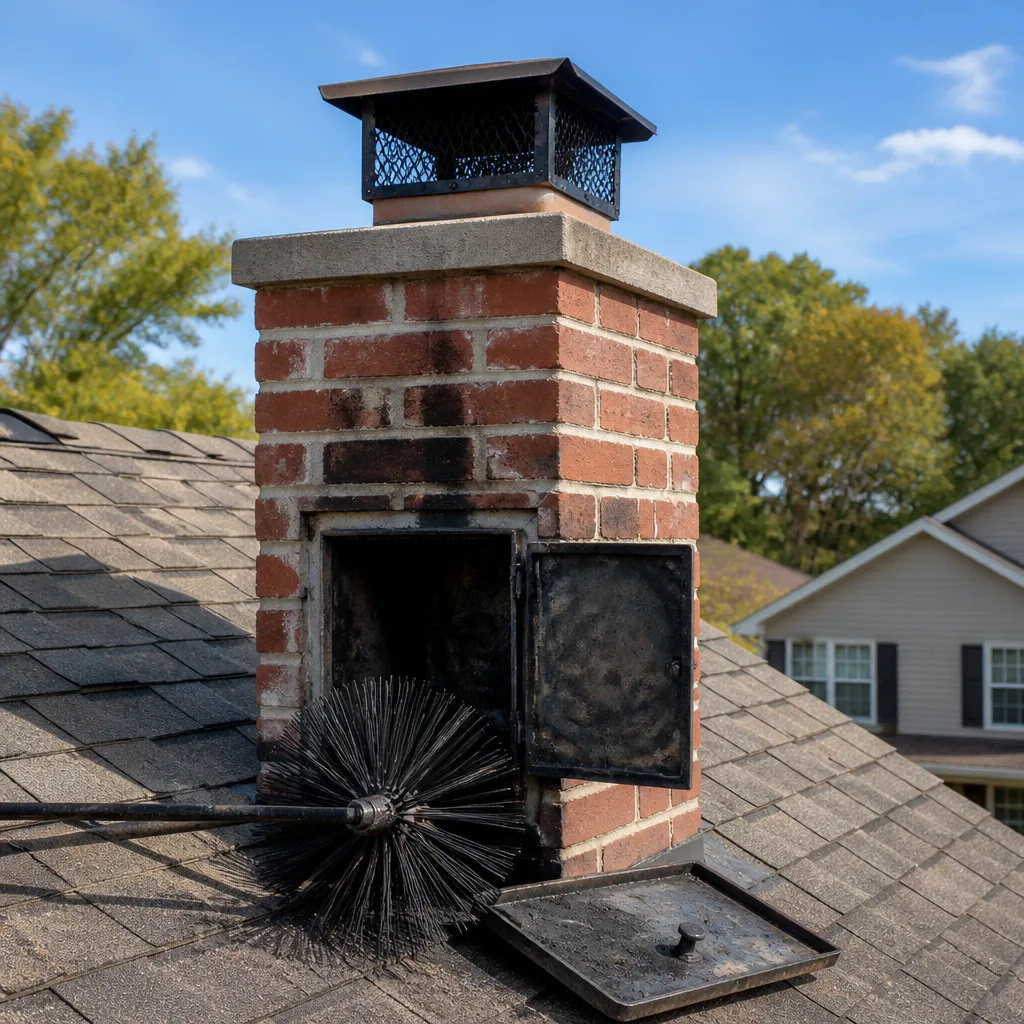 Sweep & inspection
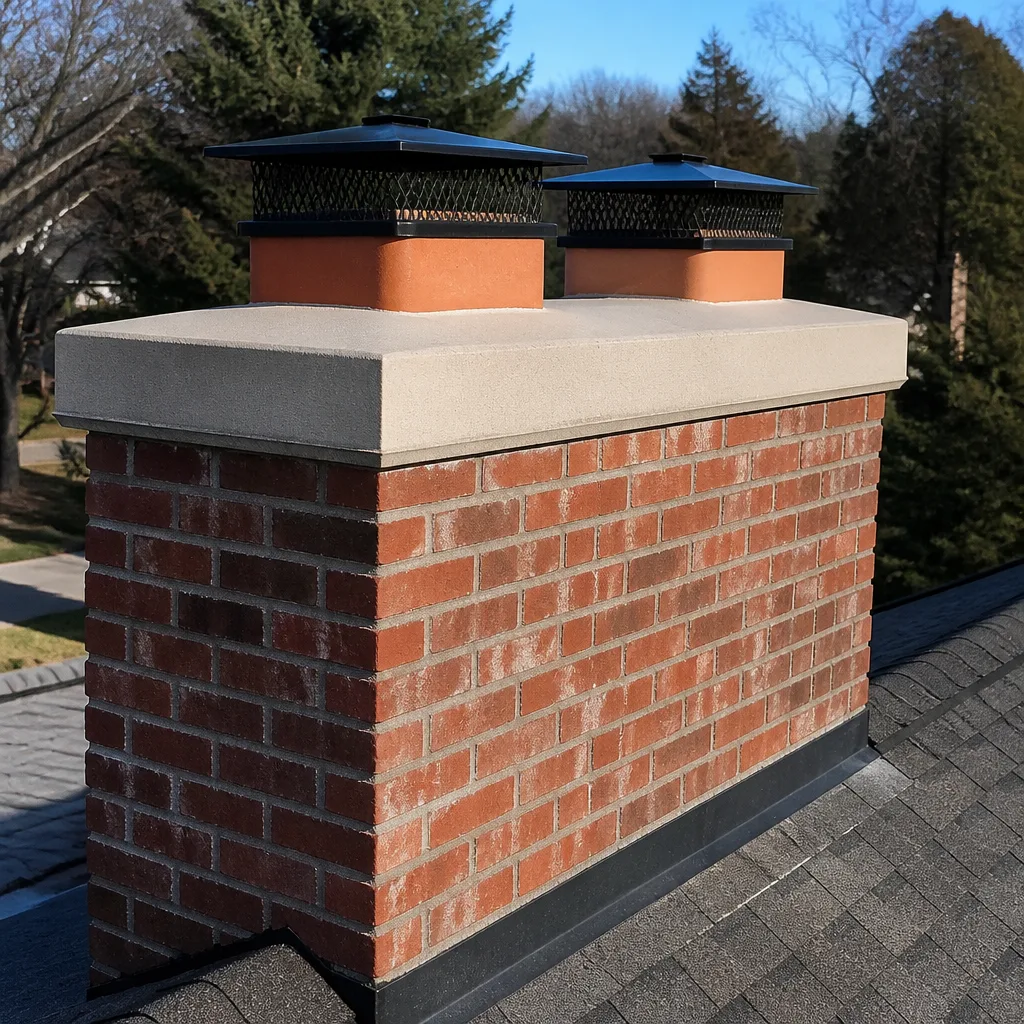 Caps & crowns
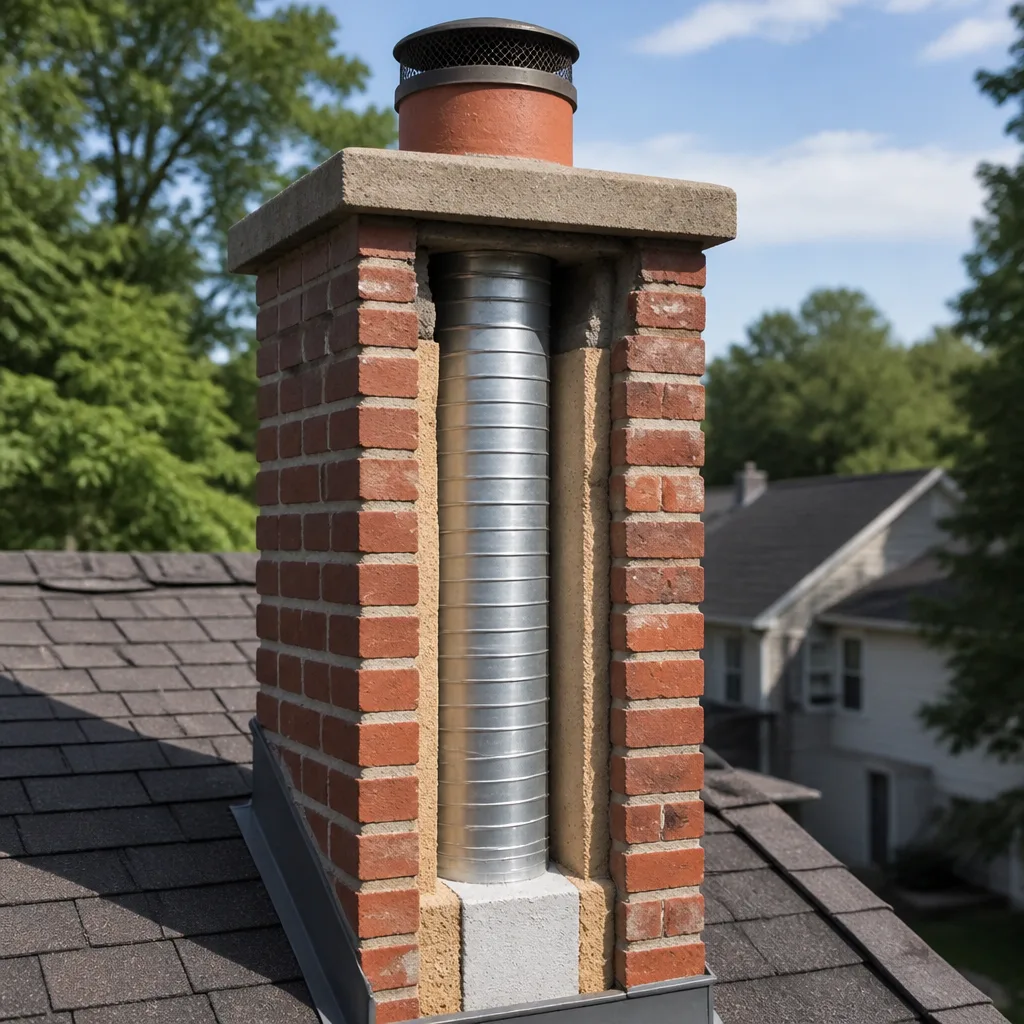 Flue relining
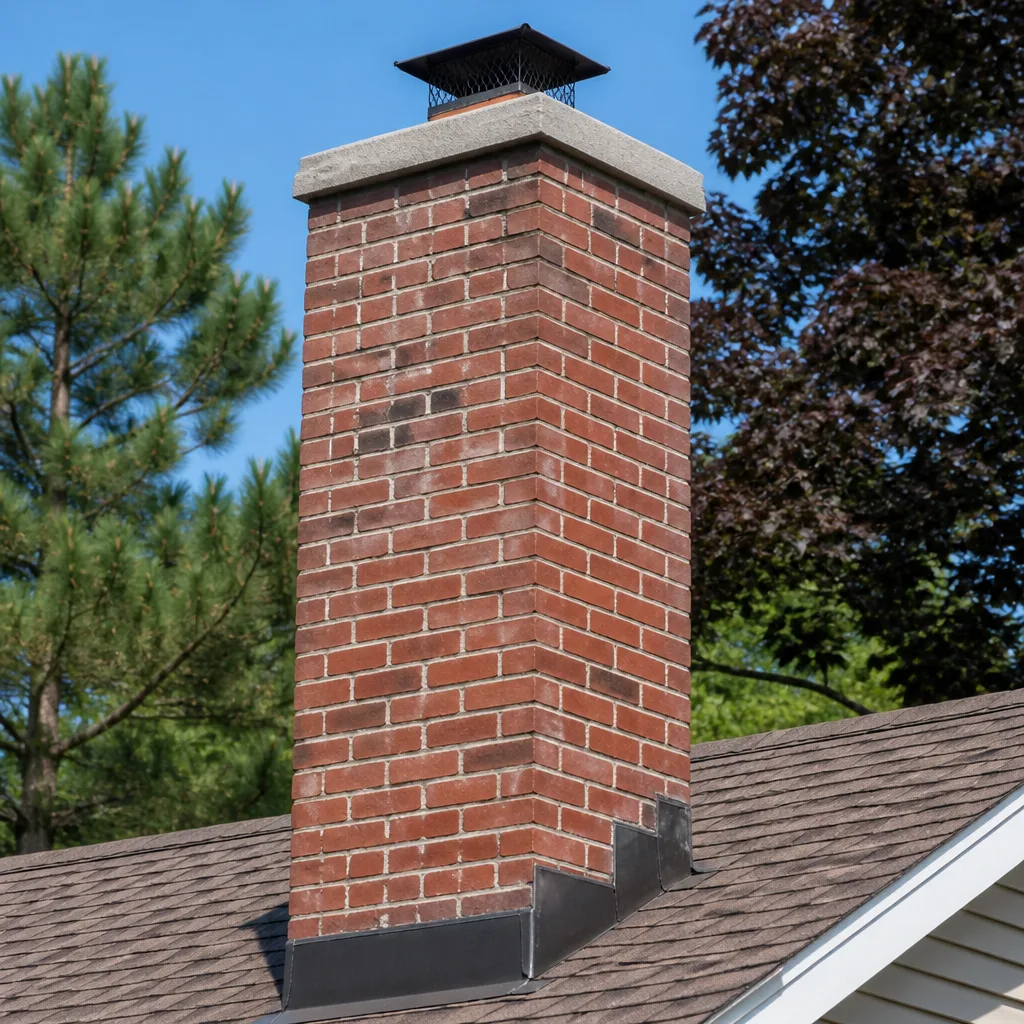 Masonry repair
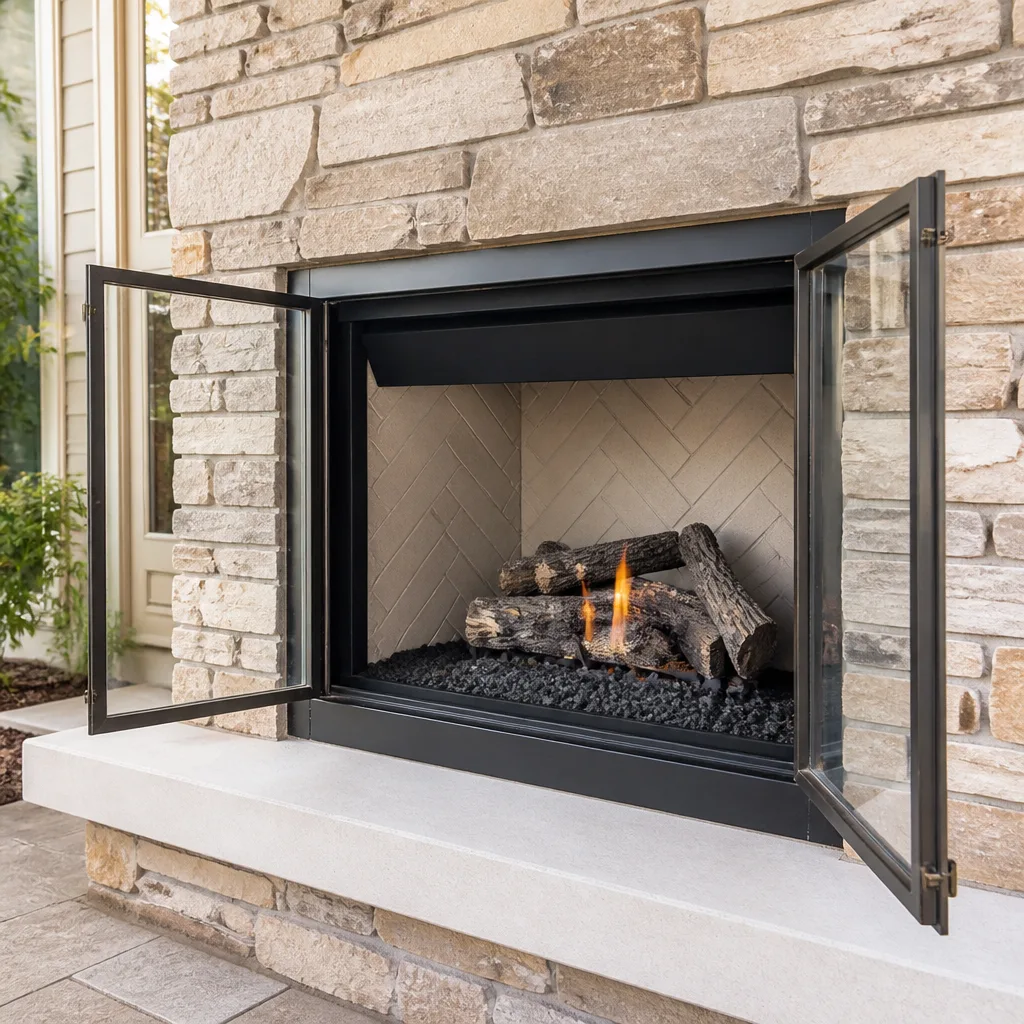 Gas fireplace service
Level 1 sweep and inspection to the NFPA 211 annual standard - flue, crown, cap, and flashing checked and photographed
Chimney sweep logs do not sweep chimneys. They loosen some creosote - which then falls where a brush and vacuum still have to collect it.
DIY vs Professional Chimney Cleaning: The Fullerton Homeowner’s Decision Guide
Home Depot sells chimney brushes. The brushes a professional uses aren’t on that shelf, and that gap in tooling is what separates a cleaned flue from a flue that only looks cleaned. Most Fullerton homeowners assume the decision comes down to saving money, but the real question is whether your specific chimney can be cleaned properly with consumer tools at all. Some can. Many can’t. This guide walks you through the three factors that actually settle it for your chimney, what you can safely handle yourself, where the DIY risks get serious in Southern California construction, and how the honest cost comparison shakes out in the Fullerton market. By the end you’ll know exactly which side of the line your chimney falls on.
Quick Answer
A motivated homeowner with the right tools can handle light Stage 1 creosote in a straight, accessible flue. Anything beyond that – glazed creosote, offset flues, exterior chase construction, prefab inserts, or any chimney you can’t inspect from top to bottom – needs professional equipment and access to clean it correctly and safely. The decision hinges on three things: your flue’s configuration, the type and depth of creosote present, and whether you can see the whole flue interior afterward. If you can’t answer yes to a clean inspection of all three, it’s a professional job.
Styles & brands we work with
- Sweep & inspection
- Caps & crowns
- Flue relining
- Masonry repair
- Gas fireplace service
Table of Contents
- The Three Factors That Settle the DIY Question
- What You Can Safely Do Yourself: The Legitimate DIY Scope
- Why Southern California Chimneys Are Different
- The Equipment Gap: Consumer Kits vs Professional Systems
- The Liability and Insurance Angle
- Honest Cost Comparison for Fullerton
- How a Professional Cleaning Actually Works
- When to Call a Professional
The Three Factors That Settle the DIY Question
Every chimney cleaning decision comes down to three variables, and each one is answerable before you touch a brush. Get clear on all three and the DIY-or-professional question answers itself.
Factor 1: Flue Configuration
A straight vertical flue with a clear top termination and a firebox you can reach is the ideal candidate for homeowner cleaning. The brush goes down, the debris falls into the firebox, and you vacuum it out. Once the flue has an offset – a jog where the flue angles to clear a roofline or fireplace mantle – the brush can jam, miss sections entirely, or leave creosote packed into the angle where future fires will bake it harder. Fullerton has plenty of homes with offset flues, exterior chase construction, and prefab inserts that hide more of the flue than the homeowner can reach. If your flue jogs at all, DIY cleaning is unreliable at best.
Factor 2: Creosote Type and Depth
Creosote forms in three stages. Stage 1 is a light, dusty soot that brushes off readily. Stage 2 is flaky and crusty, sometimes sticky. Stage 3 is glazed and hard, and it’s the one that fuels chimney fires. Consumer brushes handle Stage 1. They struggle with Stage 2. They don’t touch Stage 3 – that requires rotary cleaning equipment with poly or steel whips, sometimes chemical treatment, and an experienced eye to tell whether the glazed creosote has damaged the liner underneath.
Factor 3: Inspection Access
Cleaning without inspection is a gamble. The brush tells you nothing about the inside of the flue on the way down – it just scrapes. A professional inspection camera shows liner cracks, gaps at flue joints, missing mortar, and hidden creosote in offset sections. If you can’t see your entire flue interior before and after cleaning, you don’t actually know the cleaning worked. That’s the barrier most Fullerton homeowners hit when they try a DIY cleaning: they get a clean-looking firebox and no real picture of the flue.
Score yourself honestly on all three. If any one is unclear or unfavorable, professional cleaning is the right call. Our chimney sweep includes inspection as standard, precisely because cleaning and inspection are the same job done right.
What You Can Safely Do Yourself: The Legitimate DIY Scope
We’re not going to argue every homeowner should call a professional every time. Plenty of routine maintenance is genuinely safe to handle yourself, and doing it keeps your system in better shape between professional cleanings. The key is knowing where the line sits.
Safe for homeowners
- Firebox vacuuming: Ash, soot, and debris from the firebox floor. Use a shop vac rated for fine ash, and only when the fireplace is completely cold.
- Smoke shelf and smoke chamber debris removal: The area directly above the damper. Reachable with a brush and vacuum from the firebox opening.
- Damper operation checks: Open and close the damper fully and confirm it moves freely and seats correctly. Look for rust or obstruction.
- Visual check of the firebox: Look for cracked firebrick, missing mortar joints, or white efflorescence that could signal moisture.
- Exterior visual check: From the ground, look at the chimney cap, crown, and any visible masonry for cracks, missing cap mesh, or water staining.
- Cap screen clearing: If leaves or debris block the cap mesh and it’s safely reachable, clear with a long-handled tool from a stable position – never from the roof.
Not safe for homeowners
- Full-flue brush cleaning of anything above Stage 1: Brushing packed creosote without inspection access risks compacting it or missing sections entirely.
- Any roof-level work: Fullerton roofs are steeper and more fragile than most homeowners assume. Roof access is the leading source of homeowner injury in chimney maintenance, and it’s never worth it.
- Liner inspection or restoration: You can’t see it without a camera. You can’t repair it without trade-level materials. Leave it.
- Glazed creosote removal: Stage 3 creosote removal requires rotary tools and chemical agents that burn skin and eyes if handled without professional training and protective gear.
The mental test is this: if you can do the task from the firebox opening or from the ground, you’re probably fine. If it involves the roof, the flue interior above the smoke chamber, or anything requiring the fire to be off while you’re upside down in a tight space, call us.
Why Southern California Chimneys Are Different
The Midwest chimney types you see demonstrated online are straight, vertical, and lined with clay tile in a masonry stack. Fullerton has plenty of masonry chimneys, but it also has a substantial number of chimneys that don’t match that picture, and the differences matter for DIY cleaning.
Exterior chase construction
Many Fullerton homes were built with exterior chase construction – a framed chase on the outside of the house that encloses a metal flue rather than a full masonry stack. In these systems, the chase walls often shrink and crack over time because they’re exposed to Southern California’s dry heat cycles. The flue inside the chase may be factory-built metal with specific clearance requirements from the wood framing. When you run a brush down a chase flue without inspecting it, you can dislodge debris into hidden sections you can’t reach, or scrape against insulation that was never designed to see moving brush heads.
Prefab inserts and fireplace retrofits
Lots of Fullerton homes have had prefab inserts installed over the past few decades to upgrade an existing fireplace. These inserts bring their own flue systems with specified liner connections, baffles, and sometimes secondary air intakes. A homeowner brush kit sized for an open masonry flue is the wrong tool for a prefab insert system, and pushing a brush down one can snag on the baffle or the flue collar. Inserts also often have tighter flue diameters that make consumer brushes inefficient at full coverage.
Offset flues and hidden jogs
Because so many Fullerton homes sit on lots where the fireplace had to work around structural constraints, offset flues are common. A flue that jogs 6 to 18 inches – typical when the fireplace and chimney aren’t perfectly aligned – creates an elbow that a straight consumer brush cannot clean. The brush passes through but doesn’t scrub the angled walls, and creosote accumulates in the elbow as a result. The professional rotary systems we use can navigate the offset with flexible rods and whips specifically designed for that geometry.
Dry wood and local burning habits
Fullerton’s mild winters mean many homeowners burn intermittently – a fire on cool evenings, a weekend fire around the holidays, long stretches with no burn at all. This intermittent burning pattern actually produces more creosote per cord than regular burn cycles, because cool flue starts and restarts deposit condensation on the flue walls that creosote grabs onto. Firewood quality varies widely too, and unseasoned wood deposits far more creosote than the dry hardwood this climate can season in a yard. If you’re not certain of your wood’s moisture content, assume the creosote load is higher than the visual suggests – which pushes the answer toward professional cleaning.
None of these factors makes DIY cleaning impossible in every Fullerton home. But they make the “straight flue, brush through” assumption wrong for a lot of them. Before you buy a brush kit, look up your flue configuration or have it checked.
The Equipment Gap: Consumer Kits vs Professional Systems
The Home Depot brush kit is a metal or poly brush on a flexible rod. That’s genuinely the same basic concept as what a professional uses, but the similarities end there. Here’s the actual difference in equipment, and what each does.
Rotary cleaning systems
Professional rotary systems are powered: a drill or motor spins the brush head at controlled RPM with flexible whips that adapt to flue diameter and contour. That rotational action is what cleans Stage 2 and Stage 3 creosote – a hand brush strokes across one section at a time, but a rotary head gets all sides of the flue and the elbow surfaces that a straight brush can’t reach. Different whip types (poly, steel, chain, wire) get selected based on the creosote stage and the flue material, because using the wrong one on a metal liner will scratch it. This is the single biggest gap between consumer and professional cleaning.
Closed-system HEPA vacuums
Every cleaning job produces soot – fine, pervasive soot that gets into the room, the house, and the homeowner’s lungs if it isn’t controlled. A consumer shop vac blows fine soot back out the exhaust unless it’s HEPA rated, and most shop vacs aren’t’ rated true HEPA. Professional closed-system HEPA vacuums run at high CFM with true HEPA filtration and attach directly to the firebox opening, so the soot and debris go straight into a sealed collection system. When we do a cleaning in a Fullerton home, the room is left as clean as we found it – not covered in a fine gray film that takes days to settle.
Inspection cameras
A cleaning without a camera inspection is a blind cleaning. Professional chimney inspection cameras are articulated borescopes that run the length of the flue and record the interior – flue liner condition, joints, offsets, cap internals, and the smoke chamber. The photo report is what tells you whether a specific symptom you noticed (smell, draft, smoke backup) is a cleaning issue, a repair issue, or something that can safely wait. None of that information is available from a brush kit, no matter how well-equipped the homeowner is.
What else professional equipment does
- Liner protection: Professional brushes can damage a liner if used incorrectly, but trained technicians know the flue material and select the whip accordingly. Consumer brushes only come in one or two types, so they treat clay, metal, and cast-in-place liners the same way.
- Sealed debris capture: Professional systems bag the creosote for safe disposal. Creosote dust is corrosive and toxic in the home – a consumer brush distributes it.
- Access hardware: Professional setups include flue access doors, chimney-top fixtures, and drop cloths that keep the workspace protected and the flue reachable at all angles.
- Trade-level restoration materials: If the cleaning reveals liner deterioration, we work with DuraFlex liner systems and HeatShield ceramic resurfacing to fix it – materials most homeowners can’t source, let alone install correctly.
None of this exists on the retail shelf. That’s not an accident; it’s a professional-grade ecosystem built for the trade.
The Liability and Insurance Angle
Homeowner’s insurance claims for chimney fires get scrutinized in ways many people don’t anticipate. If a chimney cleaning precedes a chimney fire, the claim investigation may examine whether the cleaning was done properly and whether the homeowner had a reasonable basis for believing the chimney was maintained.
This isn’t about catching homeowners out. It’s about how insurers assess risk and whether maintenance obligations in the policy were met. Most homeowner policies require the insured to maintain the property in good condition and to take reasonable steps to prevent damage. A chimney fire in a chimney that hasn’t been cleaned can be treated differently from a chimney fire in one with a documented recent cleaning and inspection.
What a professional cleaning gives you
- Documentation: A professional cleaning typically includes a written record of what was cleaned, what was found, and any issues that need attention. That record exists before a claim is ever filed.
- Inspection photo report: Our inspections come with a camera-based photo report of the flue, cap, and crown – so there’s a clear before-and-after record. If a claim question ever comes up, that report is the evidence that the system was maintained.
- Recorded recommendations: If we recommend a repair and the homeowner defers it, that recommendation is in writing. If a related issue arises down the road, the record shows the homeowner didn’t’ skip a needed repair unknowingly – they made a documented decision.
- Verifiable work history: A DIY cleaning leaves no paper trail. If you sell the home and the buyer’s inspector has questions, a professional record answers them.
We’re not insurance advisors and we don’t claim to be. If you have a specific coverage question, talk to your insurer. But the practical reality is that documented maintenance is treated differently from undocumented maintenance in claim situations. That’s true for chimney cleaning the same as it’s true for any other major system in your home.
Honest Cost Comparison for Fullerton
The cost question deserves a real answer, not a hand-wave. Here’s how the two paths compare in the Fullerton market, with all the hidden line items included.
The DIY path
- Consumer brush kit: $30 to $80 for a basic poly or wire brush set with rods.
- Shop vac (if you don’t own one): $50 to $150 for a shop vac, and a HEPA-rated one costs more.
- Drop cloths, respirator, gloves, safety glasses: $40 to $80 total.
- Disposal: Creosote is a hazardous material in most jurisdictions. Bagging, transporting, and disposing of it costs whatever your local disposal option costs.
- Time: A thorough homeowner cleaning of an accessible straight flue takes 2 to 4 hours for a careful first-timer, plus setup and cleanup.
- Missed problems: The unquantifiable cost. If DIY cleaning misses a liner crack, glazed creosote, or a failing cap, you’ve spent the money and still don’t know the state of the system. Missed problems surface later at higher cost.
The professional path
Professional sweep + inspection pricing in the Fullerton market is typically quoted as a range based on flue configuration, access difficulty, and whether a camera inspection is included as standard. Our written estimate is set before the work begins, and the flat-price sweep is agreed before booking so there’s no surprise on the day. We include the camera inspection and photo report in the sweep because cleaning without inspection is only half the job.
Where the DIY economics break down
On a straight, accessible, Stage 1 flue in a masonry chimney, DIY can stack up. You already own the tools, you’re comfortable on a stable stepladder, and you’re diligent about inspection. Plenty of Fullerton homeowners are in that position and cleaning on their own is a reasonable choice.
But the economics flip once any of these are true:
- You don’t already own a shop vac – that’s half the cost of a professional sweep already spent
- Your flue has an offset – DIY gives you partial coverage you can’t diagnose
- You’ve had a chimney fire at any point – Stage 3 creosote usually follows and needs rotary cleaning
- You’ve never had the chimney inspected – you need the camera information more than you need the brush
- You’re buying or selling the home – the inspection documentation matters
The honest answer: DIY isn’t a scam and DIY doesn’t always cost more. But the “missed problem” risk is real, and a professional sweep that includes inspection is doing two jobs. Our team can walk you through what a fair estimate looks like for your specific flue type when you call.
How a Professional Cleaning Actually Works
If you’ve never seen a professional cleaning and you’re deciding between DIY and pro, knowing what the job involves helps you judge whether it’s worth the difference. Here’s what a professional sweep at a Fullerton home looks like when done to a professional standard.
- Pre-cleaning inspection: We inspect the firebox, damper, smoke chamber, and flue before any brush work starts. Cleaning a damaged liner can make the damage worse, so the first step is confirming the flue is cleanable.
- Room protection: Drop cloths cover the surrounding floor, and the firebox opening is sealed to the vacuum connection. This is what keeps the room clean.
- Firebox and smoke chamber: Ash and debris are removed from the firebox floor, and the smoke shelf and chamber are cleaned to remove the creosote that accumulates where the fire’s heat exits.
- Full-flue rotary cleaning: The flue is cleaned from the top down (or bottom up, depending on access) with the appropriate rotary whip for the flue material and creosote type. This is the step a consumer brush kit replaces clumsily.
- Camera inspection of the cleaned flue: A camera runs the length of the flue and records what’s visible. Any cracks, gaps, or defects are documented with photos.
- Crown, cap, and exterior check: The chimney crown and cap are inspected – the two components where most water intrusion starts. An improperly sealed crown lets water into the masonry, and a missing or damaged cap lets rain and animals into the flue. Gelco and Famco products are what most top-of-chimney repairs call for.
- Report and estimate: You get the photo report and a written recommendation for any repairs. Nothing is added to the quote without camera evidence you can see for yourself. If the repairs can safely wait, we say so.
The whole process takes a few hours for a typical Fullerton home. The cleaning is the visible part; the inspection and camera report are what make it useful.
Common Mistakes to Avoid
- Cleaning from the roof without fall protection. Fullerton roofs are steeper and more brittle than most homeowners expect, especially on older homes. Getting onto a roof without ladder stabilization and a harness is the leading source of homeowner injury in chimney maintenance – never worth the savings.
- Using a consumer brush on glazed creosote. If you see shiny, black, glassy deposits in the flue, stop. A hand brush will compact it further and you’ll need rotary cleaning and possibly chemical treatment to remove it. That’s a professional job.
- Cleaning while the fire is still warm. Creosote can smolder for hours after a fire. Shop vac dust near warm embers is a fire risk, and the firebox needs to be completely cold before any cleaning begins.
- Assuming the brush cleaned the offset. A straight consumer brush passes through an offset elbow but doesn’t scrub its walls. If you have a flue that jogs, the offset stays hidden from your brush – it needs a rotary system with flexible whips.
- Skipping inspection after a DIY cleaning. The cleaning tells you the firebox is clean. It tells you nothing about the liner, the joints, or the cap internals. If you clean the flue, get the inspection done separately – it’s the part that catches problems.
- Disposing of creosote in the household trash without checking local rules. Creosote is a hazardous material in many jurisdictions. Check with Fullerton’s waste services before you toss a bag of it in your curbside bin.
- Believing the brush kit’s claims about “all creosote types”. Most consumer kits advertise broadly, but the brush types they ship with only clean Stage 1 reliably. Stage 2 and Stage 3 need rotary equipment, and no consumer kit includes that.
- Booking a sweep without checking what the price includes. A low sweep quote that excludes inspection isn’t a bargain – you’re paying for the cleaning without the information that tells you if the chimney is actually safe.
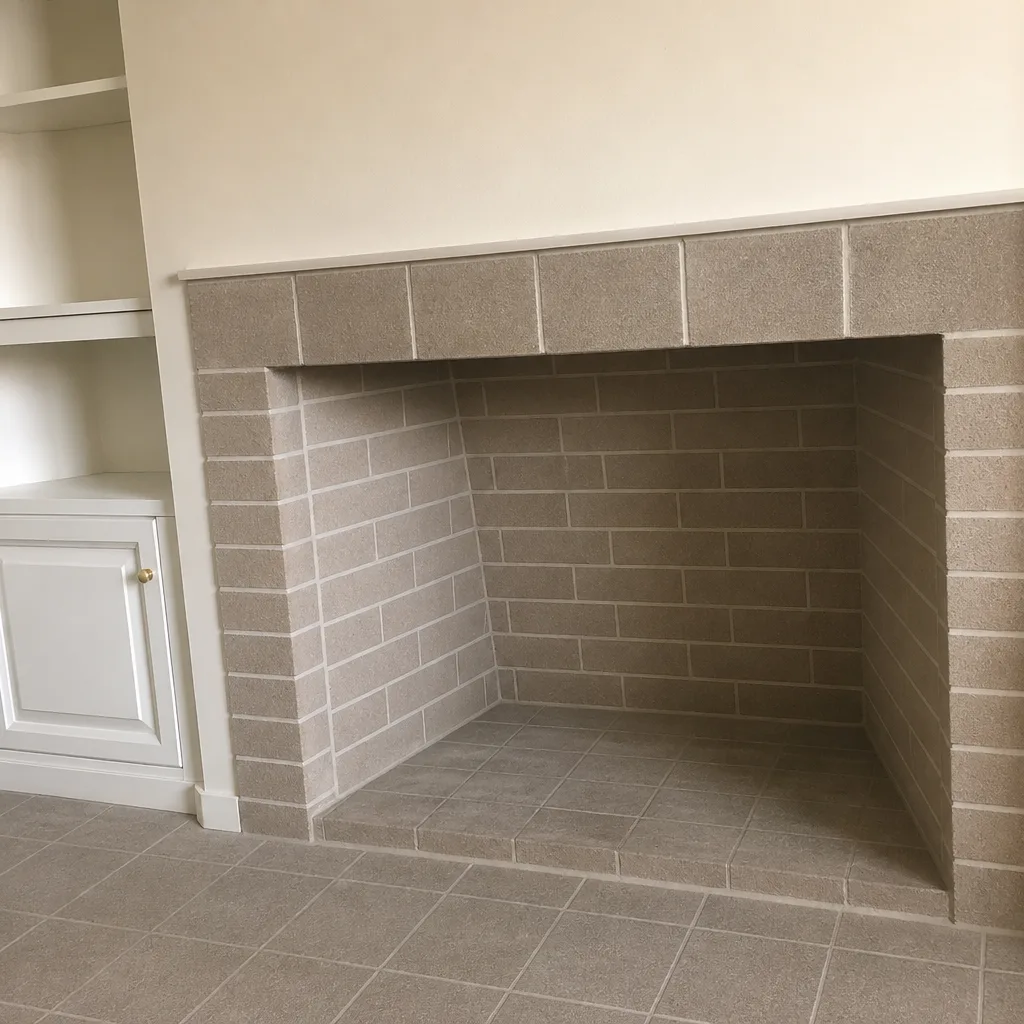
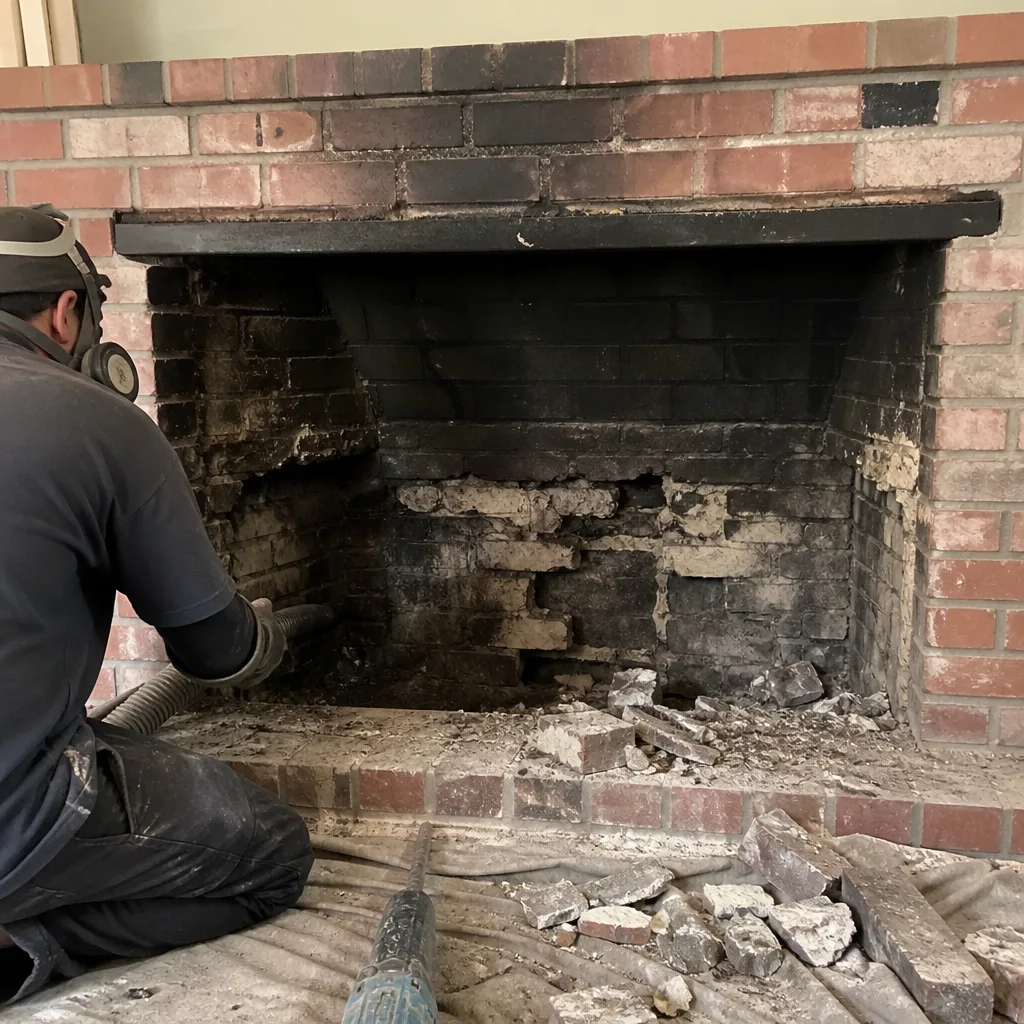
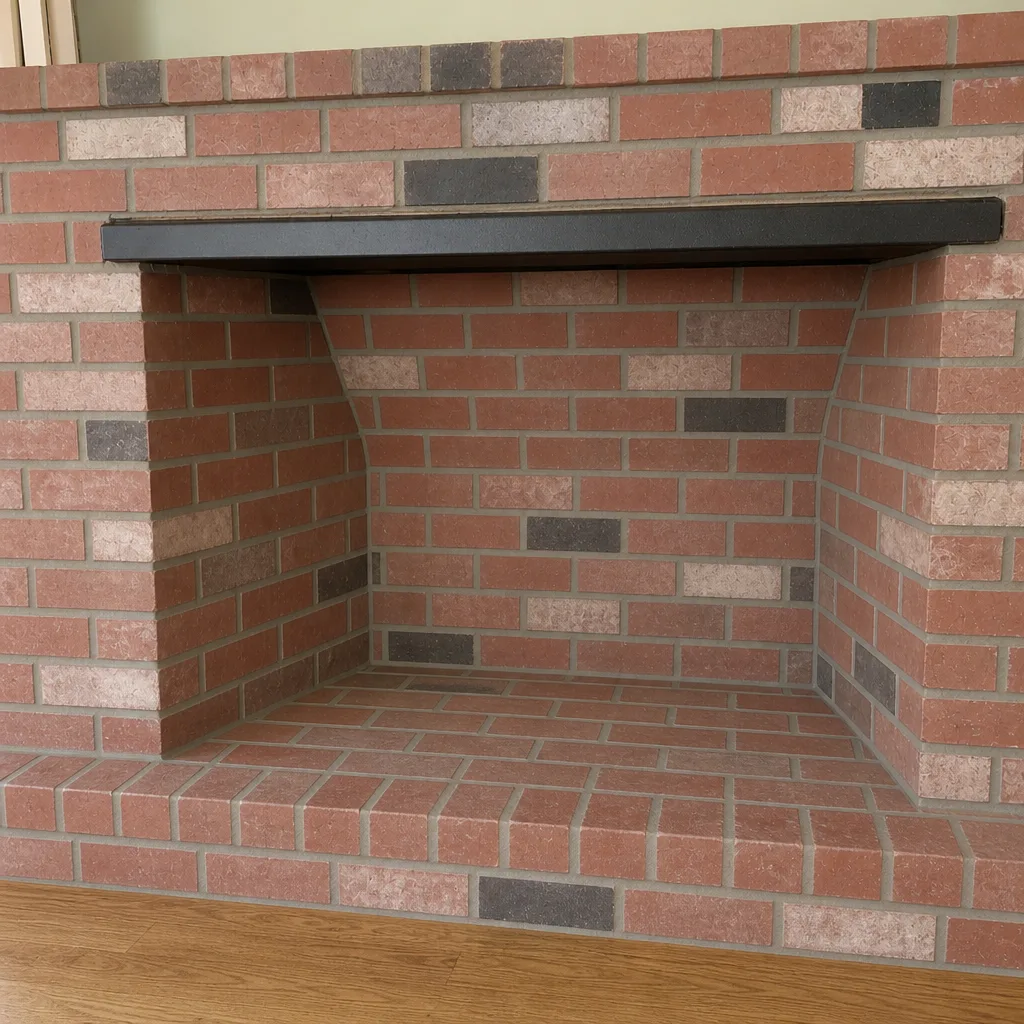
See the difference
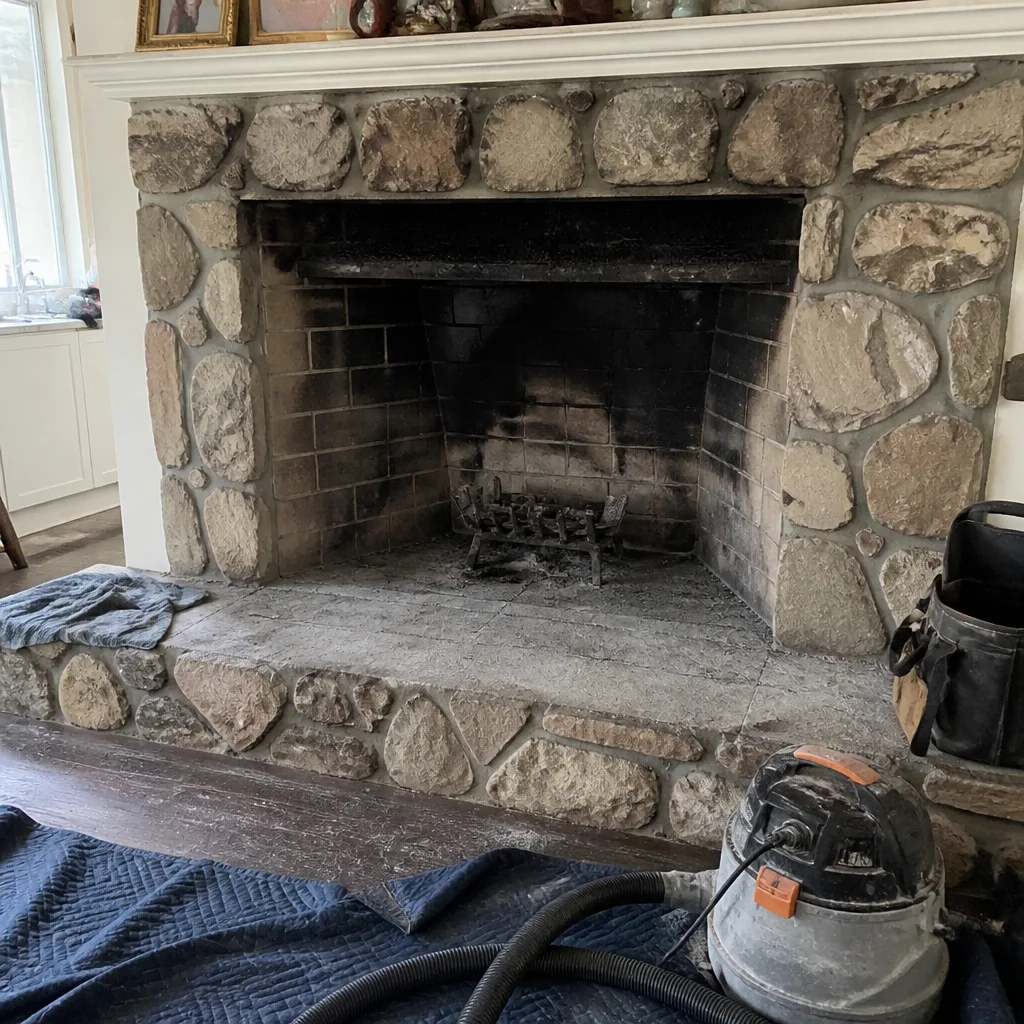 Before
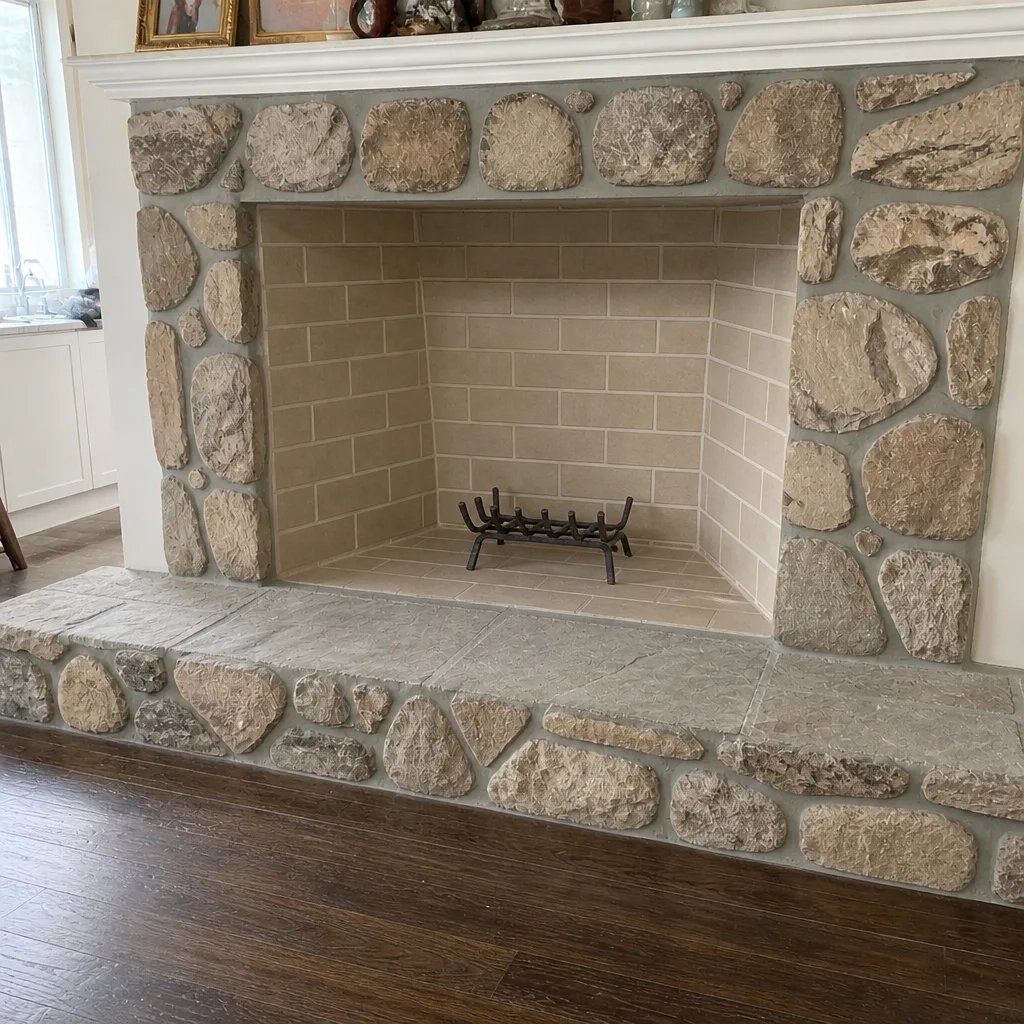 After
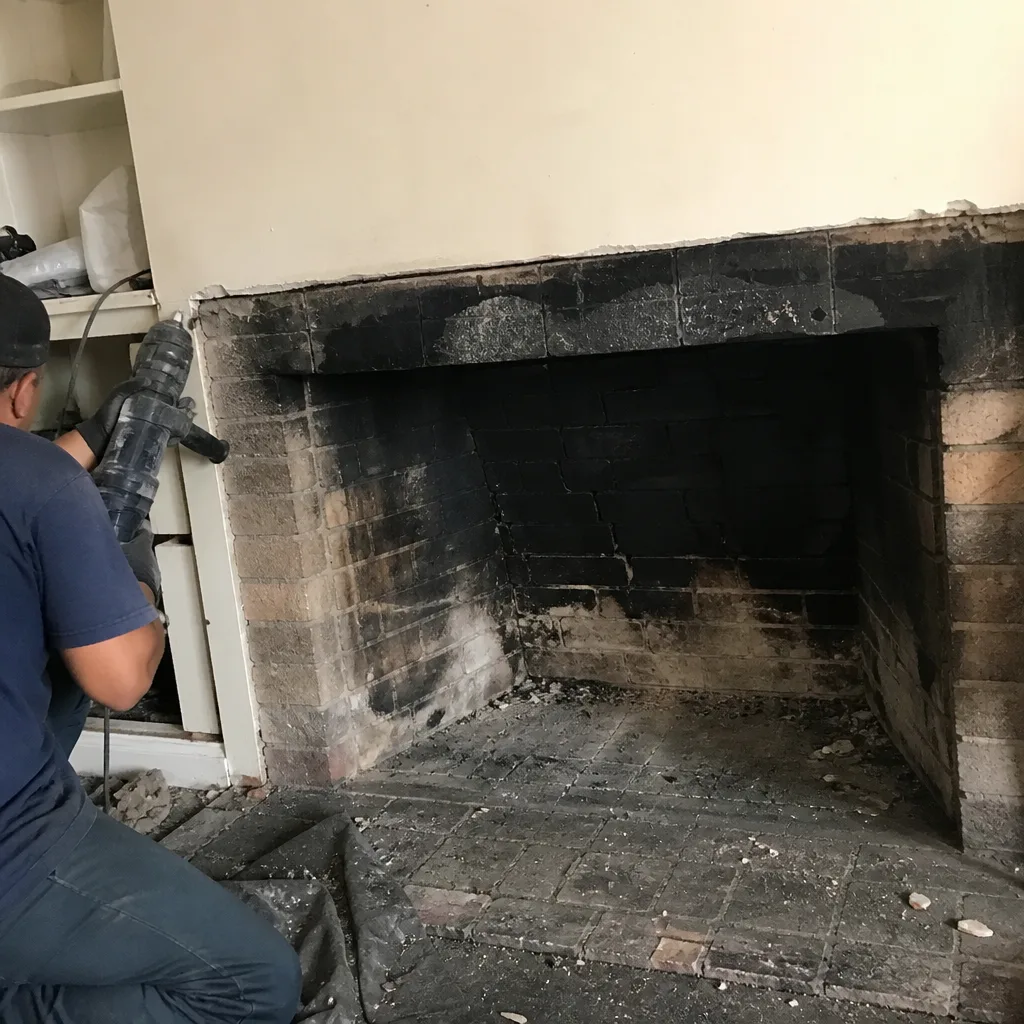 Before
 After
 Before
 After
When to Call a Professional
Some situations push DIY cleaning off the table entirely. Call a professional if any of these apply:
- You’ve had a chimney fire at any point – regardless of how small it seemed at the time
- Your flue has an offset, a prefab insert, or exterior chase construction
- You can see shiny, glazed creosote deposits in the flue
- Your fire smokes, drafts poorly, or smells like creosote even when not in use
- You’ve never had the chimney inspected and you’ve recently bought the home
- The chimney crown is cracked or the cap is missing or damaged
- You’re buying or selling a home and need inspection documentation
- You’re being told by an inspector or insurer that repairs are needed and you don’t know who to trust
Our chimney repair service covers whatever the inspection reveals – from liner restoration using HeatShield ceramic resurfacing to cap and crown installation with Gelco and Famco products – so there’s no handoff to another contractor. Fullerton Chimney Sweep offers free estimates in Fullerton. Call (833) 508-9170 and we’ll walk through your situation and schedule a sweep if it makes sense.
Frequently Asked Questions
Professional chimney sweep pricing in Fullerton typically depends on flue configuration, access difficulty, and whether the estimate includes a camera inspection. Our written estimate is set before the work begins, the price is per job, and the camera inspection with photo report is included in the sweep because cleaning without inspection is only half the job. We quote based on what your specific flue needs, not on a flat rate that assumes a standard configuration. Call (833) 508-9170 for an exact quote – estimates are free.
Only if the camera inspection shows your existing liner is cracked, deteriorated, or missing sections to the point where it can’t contain heat and combustion byproducts. A lot of liner deterioration is limited to specific sections, and HeatShield ceramic resurfacing can restore those areas without a full replacement. DuraFlex stainless liners come into play when the existing liner is damaged across its length or the flue needs a new system installed. Nothing is recommended without camera evidence you can see for yourself – if a liner can safely wait, we say so. Call (833) 508-9170 to schedule the inspection that answers the question.
Sweep frequency depends on how often you burn, not on a fixed calendar. A general rule in the trade: have the chimney swept when about 1/8 inch of creosote has accumulated on the flue walls, which for regular wood-burning in Fullerton means an annual sweep is a reasonable baseline, and for occasional burning, inspection every year and sweeping as needed is fine. Gas fireplaces need less frequent sweeping but still need periodic inspection. If you’re not sure, an inspection answers it. Call (833) 508-9170 to book one.
Yes, in the narrow case of a straight, accessible flue with only light Stage 1 creosote and a homeowner comfortable with the work from the firebox opening. No, in every other case – offset flues, prefab inserts, exterior chase construction, glazed creosote, or anything a homeowner can’t inspect from top to bottom. The decision hinges on those three factors. If you can’t answer yes to all three, it’s a professional job. Call (833) 508-9170 if you want the configuration checked first – a free estimate on the sweep is quicker than guessing.
Creosote accumulates on the flue walls every time you burn wood, and it’s the fuel for chimney fires once it reaches Stage 3. A flue that hasn’t been cleaned in years may also have a partially blocked cap, cracked liner, or failing crown that you can’t see from the firebox – and a blocked cap is a carbon monoxide risk in gas appliances. This isn’t’ a scare tactic, it’s what the inspection reveals over and over in Fullerton homes that have gone a few seasons without cleaning. Call (833) 508-9170 to get the system looked at before the next burning season.
It can, in the sense that documented professional maintenance is treated differently from undocumented maintenance in a claims situation. If you’re being asked to show records of chimney maintenance, or you’re concerned about how a claim would be evaluated, talk to your insurer directly about the specific policy language. What we can offer is a documented cleaning with a camera inspection report – a clear record of the system’s condition that answers questions later. Call (833) 508-9170 to schedule a sweep with inspection.
The Bottom Line
DIY chimney cleaning is a reasonable choice for a motivated Fullerton homeowner with a straight, accessible flue, Stage 1 creosote, and the tools and inspection access to confirm the job was done. It isn’t reasonable for offset flues, prefab inserts, exterior chase construction, glazed creosote, or any chimney that hasn’t been inspected. The decision comes down to your specific flue configuration, the creosote type present, and whether you can inspect the full flue interior afterward. If any of those is unclear, professional cleaning is the right call – and a professional sweep that includes camera inspection gives you information a brush kit can’t. That information is what separates a cleaned chimney from one that looks cleaned.
Same-Day Repair and Free Estimates
If this guide pointed you toward a professional sweep, or if you’ve been told by an inspector or insurer that repairs are needed and you don’t know who to trust, we’re ready to help. We work on the whole chimney system – not just the part you can see – from routine sweeping and inspection through fireplace repair, liner restoration, and cap and crown installation. We specify DuraFlex, HeatShield, Gelco, or Olympia Chimney products because that’s what the job actually calls for, never off-the-shelf stand-ins. Our technicians have up to 14 years of experience, and every job starts with a written estimate set before work begins. Nothing is recommended without camera evidence you can see for yourself.
For more on how we approach chimney work in Fullerton, see Fullerton Chimney Sweep. Call (833) 508-9170. We answer 24/7. Fast dispatch, 7am-7pm, Sunday through Friday. Estimates are free, and the written estimate sets the final price.
Written by the team at Fullerton Chimney Sweep.